

Home to rich and diverse collections of historical relics and thematic exhibitions on Vietnamese culture and history, National Museum of History gives visitors a comprehensive view of the development of the country from the prehistoric period through the national formation period.
History
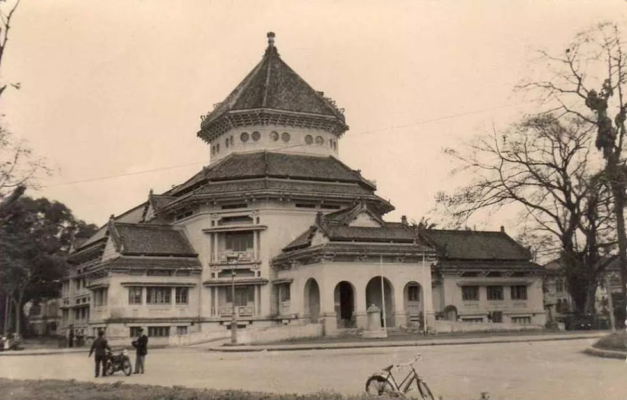
The Vietnam National Museum of History was built in 1926 under the name Louis Finot Museum by the Ecole Française d’Extreme-Orient and finished in 1932. After being taken over by Vietnamese Government, the museum changed its official name to the National Museum of Vietnamese History and opened to the public on 3 September, 1958. The National Museum of the Vietnamese Revolution was originally the Department of Indochinese Commerce that built in 1917 under the French time. The Museum was officially opened for visitors on 6 January, 1959. After more than half a century of operation, the entire resources of the former National Museum of Vietnamese History and the National Museum of the Vietnamese Revolution have been merged into a unique museum – The Vietnam National Museum of History as of today.
This is is a place to preserve, display, and introduce Vietnamese history from prehistoric to present through a system of extremely rich and valuable documents and artifacts, including many National Treasures. Housed in a colonial French building which is a cupola-shaped edifice, the museum was designed as a combination of French and Chinese architecture. The building designed by Hebrard, an eminent French architect, and urban planner, incorporates double walls and balconies for a natural airing system and protection from sunshine.
You might be interested
One Pillar Pagoda (Chua Mot Cot)
Hanoi is famous for many unique architectural works in which the One Pillar Pagoda (Chua Mot Cot) – an age-old sacred venue carrying cultural and historical imprints of the nation resides. Visitors of Silk Path coming to the capital are amazed by this impressive ancient masterpiece.
Learn more..